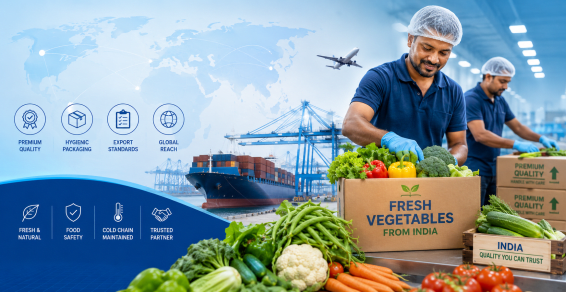
Global demand for vegetables from India is rising fast, and 2026 has brought new expectations around freshness, food safety, and packaging that buyers simply cannot ignore. Whether you are a wholesale importer, a retail chain, or a food distributor sourcing produce for Australia, the UAE, Canada, Europe, or Africa, the questions are always the same. How fresh will the produce be on arrival? What quality checks does it go through? Is the packaging suited for long-distance shipping?
This guide answers those questions directly. It walks you through what makes Indian vegetables a preferred choice for international buyers, how quality is maintained from farm to port, the packaging standards that protect freshness in transit, and the compliance documentation you should expect from a serious exporter.
India’s diverse climate and fertile agricultural belts allow farmers to grow vegetables almost all year round. From leafy greens in the cooler months to gourds and root vegetables through the warmer seasons, the country’s farms produce a steady, varied supply that few other regions can match.
For international buyers, this translates into three practical advantages: consistent volume, seasonal variety, and competitive pricing without compromising on quality. India is one of the largest producers of fresh vegetables in the world, and exporters who invest in proper sourcing, grading, and cold-chain infrastructure can deliver that abundance reliably to markets thousands of kilometers away.
Quality in vegetable export is not a single checkpoint. It is a chain of decisions made from the moment a crop is harvested to the moment it reaches a buyer’s warehouse.
Sourcing from verified farms. Reliable exporters work with farms that follow Good Agricultural Practices (GAP), which cover everything from safe pesticide use to soil and water management. This is the first line of defense against contamination and inconsistent quality.
Grading before packing. Once harvested, vegetables are washed, sorted, and graded by size, weight, and colour. This step matters because buyers in different markets often have different specifications, and pre-grading avoids costly rejections at the port of entry.
Pre-shipment inspection. Before any consignment leaves India, it should pass through pre-shipment inspection and receive phytosanitary certification from an APEDA-approved lab. This certification confirms the produce is free from pests and disease, which is a mandatory requirement for most importing countries.
Cold-chain handling. Temperature-sensitive vegetables lose freshness fast if the cold chain breaks at any point. Refrigerated container logistics, from the farm gate to the shipping port, are what keep leafy greens crisp and root vegetables firm after weeks in transit.
Buyers sourcing vegetables from India typically look across a few key categories:
Each category needs its own packaging and handling approach, which is why working with an exporter that understands produce-specific requirements makes a measurable difference in delivered quality.
Packaging is often underestimated, but it is one of the biggest factors in how fresh vegetables look and taste after a long export journey.
Leafy vegetables need ventilated, breathable packaging that prevents moisture buildup, which otherwise leads to early spoilage. Root and bulb vegetables are usually packed in mesh bags or ventilated cartons that allow airflow while protecting against bruising during handling. Gourds and firmer vegetables can tolerate carton packaging with cushioning layers, while more delicate produce needs individual wrapping or tray packing to prevent pressure damage in stacked shipments.
Good packaging also carries clear labeling: country of origin, batch number, and shelf-life information. This is not just a compliance requirement. It gives buyers full traceability, which matters increasingly to retail chains and food safety auditors overseas.
Before finalizing any vegetable export order, buyers should confirm the exporter can provide the following:
An exporter who can produce this documentation without delay is generally a safer long-term sourcing partner, since it shows the compliance process is built into daily operations rather than handled reactively.
Jesvil Corporation is an integrated agricultural export company connecting India’s farms to global kitchens, with sourcing networks across India and strategic operations based in Kerala. For fresh vegetables, Jesvil follows the full quality chain described above: sourcing from GAP-certified farms, grading by size and colour, pre-shipment inspection at APEDA-approved labs, and refrigerated container logistics to preserve freshness across long shipping routes.
Jesvil currently exports fresh vegetables to Australia, New Zealand, UAE, Canada, Europe, and Africa, with flexible packaging tailored to each market’s needs, whether that is bulk supply for wholesale importers or retail-ready packing for supermarket chains. Every shipment is backed by phytosanitary certification, shelf-life documentation, and country-of-origin certificates, so buyers have full visibility into what they are receiving before it arrives.
1. What vegetables does India commonly export?
India exports a wide range of vegetables including onions, leafy greens, gourds, root vegetables, tomatoes, and Ladies Finger, with supply varying by season and growing region.
2. How is freshness maintained during long-distance export?
Freshness depends on cold-chain logistics from harvest to delivery, combined with proper grading, breathable packaging, and refrigerated container shipping.
3. What certifications should I check before importing vegetables from India?
Look for phytosanitary certification from an APEDA-approved lab, along with compliance documentation for your country’s import regulations and a country-of-origin certificate.
4. Can I get vegetables packed for retail shelves rather than bulk supply?
Yes. Established exporters like Jesvil offer flexible packaging, including retail-ready formats, based on the buyer’s market requirements.
5. How do I request a bulk quote for vegetables from India?
You can contact Jesvil’s export team directly through the website enquiry form or by emailing sales@jesvil.co.in.
6. Ready to Source Fresh Vegetables from India?
If you’re looking for a dependable partner for vegetables from India, Jesvil Corporation offers GAP-certified sourcing, strict quality grading, and full export compliance across every shipment. Get in touch with our team for a quote tailored to your market.

 Call :
 Email :